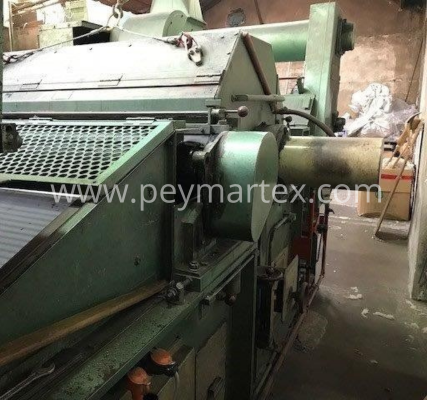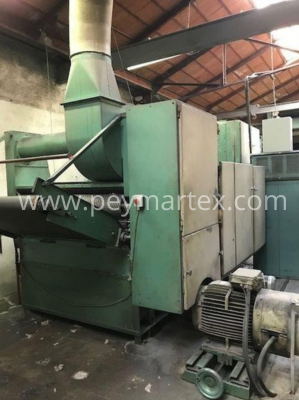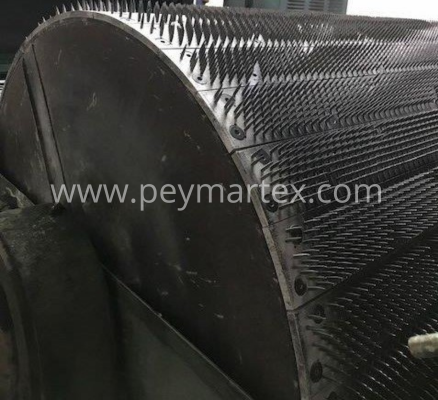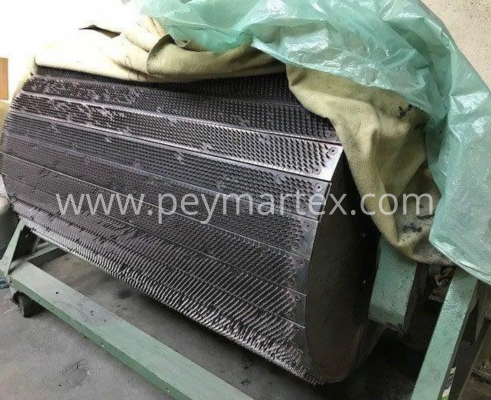
Laroche SuperEurope 1500 tearing machine (hard waste opener)
LAROCHE SuperEurope tearing machine 1460mm useful width, a high-performance machine designed for textile recycling lines requiring open uniform fibre with minimal breakage. Its single-body design optimises the process, ensuring stable and continuous opening even with difficult materials.
With LAROCHE’s characteristic reliability, this model is ideal for non-wovens, open-end spinning, fillings, geotextiles, the automotive industry and technical applications where regenerated fibre quality is critical.
Key technical features:
Working width: 1460 mm
Feeding table with feeding conveyor
Feeding roll driven by speed variator
Tearing unit with pinned lags cylinder of 1460 mm length width and 1000 mm diameter
Dust cleaning unit with condenser and independent fan.
Lap forming calender at the exit of the condenser
A single, robust and balanced opening unit for stable operation.
High-strength, crescent-shaped feed roller, designed to handle a variety of textile waste: woven fabrics, knitted fabrics, non-wovens, post-industrial and post-consumer waste.
Precise control of opening intensity, reducing fibre breakage.
Optimised feed table, ensuring a constant flow and preventing blockages.
Low maintenance, with quick access to critical components.
Production benefits
Longer, more uniform fibres, ideal for subsequent carding and blending processes, as well as airlay, fillings, etc.
Complete versatility, capable of processing everything from clean cuttings to complex blends.
LAROCHE reliability, recognised worldwide in textile recycling and fibre preparation.
Why choose the SuperEurope 1400 mm
The efficiency of a SuperEurope machine has been highly regarded since its inception, it is designed to operate without interruption, delivering a quality of opening that enhances the efficiency of the entire production line. Its compact design, power and consistency make it a strategic choice for companies seeking to increase productivity, improve the quality of regenerated fibre and optimise their recycling processes.