

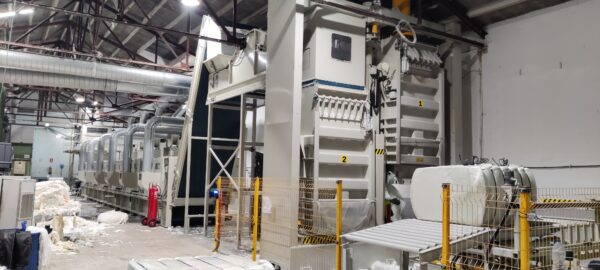
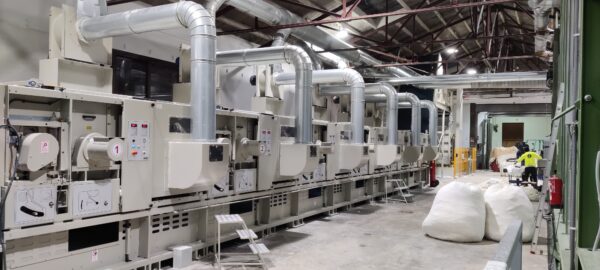
Complete lines, made by BALKAN, for the recycling of textile waste from:
– Industrial manufacturing (trimmings and scraps from garment production, fabric production, etc.)
– Post-consumer (used clothing and other types of used textile products, towels, sheets, etc.).
– Pre-consumer (clothing and other types of textile products from manufacturers’ unsold inventory).
– Other waste from textile manufacturing processes, including spinning, weaving, finishing, and nonwoven fabrics.
We supply the complete line, from the preparation of the waste to be processed to the preparation of the regenerated fibers for further processing—whether stored for later processing or for immediate processing—including the equipment and machinery necessary for the entire process. Single machines can be also supplied.
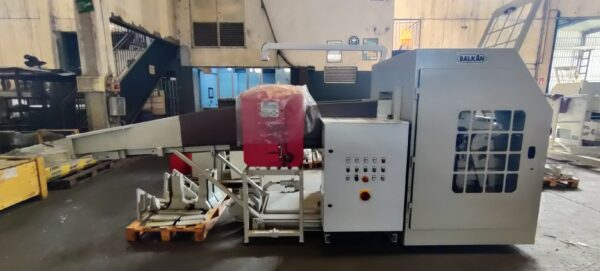
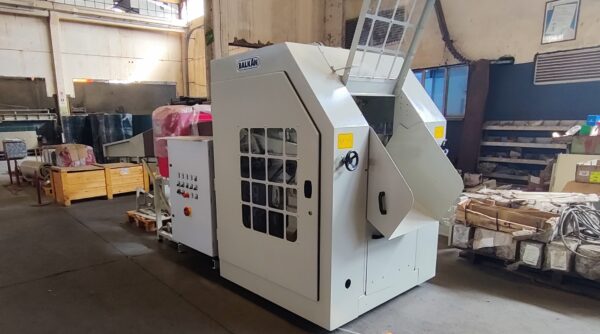
1 Cutting Section:
– Guillotine-type cutters with a metal detection system.
2 Mixing Section:
– A system for conditioning and enzymatic treatment of the raw material to prevent micro-breaks in the fibers during processing and ensure the highest quality of the final product, as well as to prevent the fibers from overheating during mechanical processing and avoid potential fires.
– Automatically fed and emptied bins, managed by the process system via management software.
– In-line detection and removal systems for ferrous particles and other non-textile impurities during the process.
– Spark detection systems to prevent potential fires.
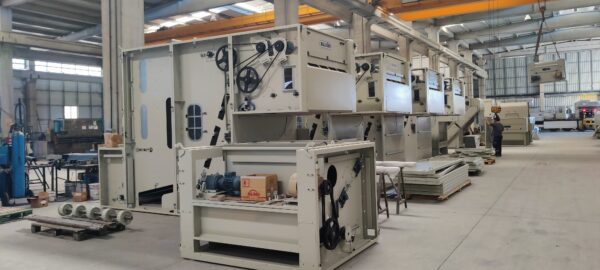
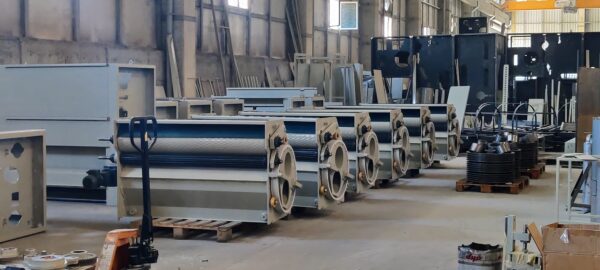
3 Regeneration Section:
– Automatic, gradual feeding system for material to be processed, based on the line’s needs.
– Modular equipment for shredding, defibering, and regenerating recycled fibers. The final configuration of this equipment depends on the type of raw material to be processed and the intended use of the regenerated fibers.
– In-house recycling system for the material for final processing, if applicable.
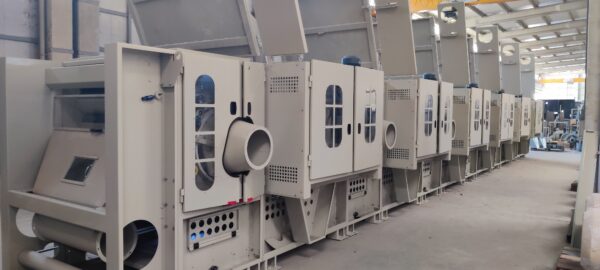
4 Final Opening Section: Systems for the thorough opening of regenerated fibers for priority use in various applications, depending on their intended reuse.
5 Final Formatting Section:
– Systems for compacting the regenerated fibers based on their intended use, whether for storage at the facility or for shipment via conventional land and/or sea transport.
– Delivery systems with pre-storage and/or direct transfer to the next production process.
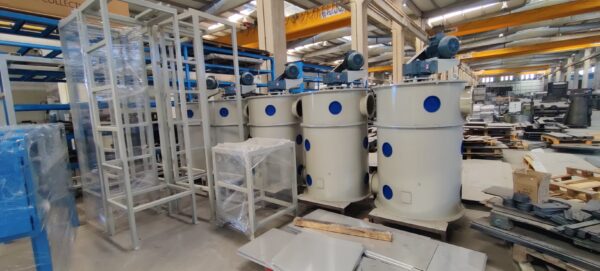
6 Environmental Filtration, Process Air Filtration, and Short Fiber Recovery Section:
– Filtration system comprising all necessary components and points to ensure a healthy working environment.
– System for detecting, filtering, and reusing short fibers for other subsequent uses.
– System for compacting short fibers for storage and/or transport.
– System for compacting dust using screw conveyors and/or briquetting systems.
All machinery manufactured and/or certified in the European Union, in compliance with all the requirements of the European CE Regulations.
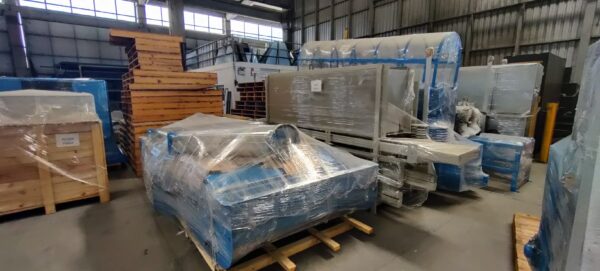
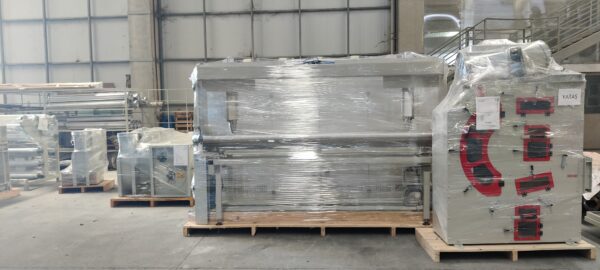
We have installed numerous textile recycling plants in various countries, designed to cover a wide variety of applications and products derived from the reuse of textile fibers. These facilities serve sectors as diverse as mattress manufacturing, insulation, furniture and upholstery, the automotive industry, light & high-density fillers, agrotextiles, transport protectors, blankets, geotextiles, footwear, padding, and interior decoration, among many others.